
Social Identity and Political Affiliation


Social identity and political affiliation are deeply intertwined aspects of human behavior, shaping how individuals perceive themselves and others within society. Social identity refers to the part of an individual’s self-concept derived from perceived membership in social groups, such as nationality, religion, ethnicity, class, or gender. Political affiliation, on the other hand, reflects an individual’s alignment with particular political ideologies, parties, or movements. Together, these dimensions influence attitudes, voting behavior, public discourse, and even interpersonal relationships. Understanding their interaction is essential for grasping modern political dynamics and social cohesion.
The Foundations of Social Identity
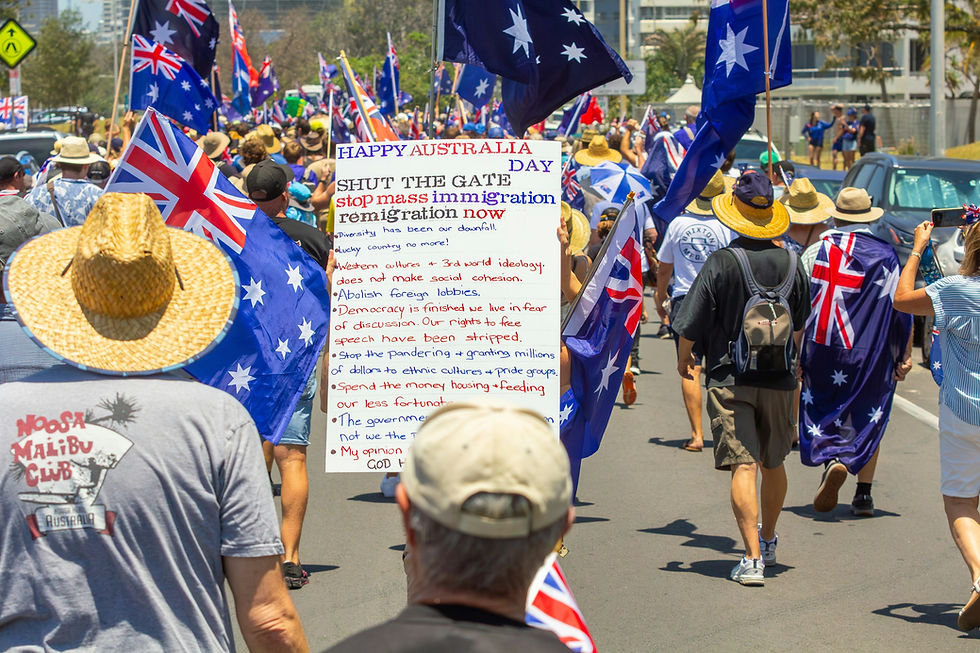
Social identity emerges from the human tendency to categorize the social world. People instinctively group themselves and others into categories as a way of simplifying complex social environments. These categories form “in-groups” -that is to say groups we identify with- and “out-groups” -those we perceive as different.
Belonging to a group provides individuals with a sense of meaning, pride, and security. For example, identifying as part of a nation or cultural community can foster solidarity and shared purpose. However, this same mechanism can also lead to bias, stereotyping, and discrimination against those outside the group.
Social identity is not fixed; it is fluid and context-dependent. A person might emphasize their national identity in one context and their professional identity in another. This flexibility plays a crucial role in shaping political beliefs, as different contexts can activate different aspects of identity.
Political Affiliation as an Expression of Identity
Political affiliation is often more than just a rational choice based on policies or economic interests, it is also a reflection of identity. Individuals frequently align with political groups that they feel represent their values, culture, or social position.
For many, political parties become symbolic communities. Supporting a party can feel similar to supporting a sports team or belonging to a cultural group. This emotional attachment can lead to strong loyalty, even in the face of conflicting evidence or policy disagreements.
Moreover, political affiliation can signal identity to others. For instance, expressing support for a particular ideology may communicate one’s beliefs about social justice, tradition, or authority. In this sense, politics becomes a language through which individuals express who they are.
The Role of Group Dynamics
Group dynamics play a powerful role in shaping political affiliation. Once individuals identify with a group, they tend to adopt its norms, beliefs, and attitudes. This phenomenon is reinforced through social interaction, media consumption, and shared experiences.
Within political groups, conformity pressures can be strong. Members may feel compelled to align their views with the dominant stance of the group to maintain belonging. Over time, this can lead to ideological homogeneity and reduced openness to alternative perspectives.
At the same time, competition between groups can intensify divisions. Political discourse often frames issues in terms of “us versus them,” reinforcing boundaries and increasing polarization. This dynamic can make compromise more difficult, as opposing groups are seen not just as different, but as fundamentally incompatible.
Identity-Based Polarization
One of the most significant consequences of the intersection between social identity and political affiliation is polarization. When political beliefs become closely tied to identity, disagreements are no longer just about ideas: they become personal.
Identity-based polarization can lead to several outcomes. Increased hostility is one of them, as people may view political opponents as threats rather than fellow citizens. Another consequence could be selective information processing, as individuals are more likely to accept information that supports their group and reject opposing evidence. Lastly, social fragmentation which weakens relationships across political lines, reducing opportunities for dialogue and understanding.
This form of polarization is particularly challenging because it is emotionally charged. Changing someone’s political views may feel like asking them to abandon a part of their identity.
The Influence of Media and Technology
Modern media environments amplify the connection between social identity and political affiliation. Social media platforms, in particular, allow individuals to curate their information sources and social networks, often reinforcing existing beliefs.
Algorithms tend to prioritize content that aligns with users’ preferences, creating “echo chambers” where individuals are exposed primarily to like-minded perspectives. This reinforces group identity and can intensify political divisions.
Additionally, online spaces make identity signaling more visible. Sharing political opinions, symbols, or affiliations becomes a way of publicly affirming one’s identity. While this can foster community, it can also deepen divides by making differences more salient.
Intersectionality and Complex Identities
It is important to recognize that individuals possess multiple, overlapping identities -a concept often referred to as intersectionality. A person’s political affiliation may be shaped by the interaction of various factors such as race, gender, class, religion, and geography.
These intersecting identities can create complex and sometimes conflicting political perspectives. For example, someone might share economic interests with one group but cultural values with another. This complexity challenges simplistic assumptions about political behavior and highlights the diversity within social groups.
Understanding intersectionality can also reveal why political coalitions are often fragile. Aligning diverse identities under a single political agenda requires negotiation and compromise, which can be difficult to sustain over time.
The Role of Leadership and Narratives
Political leaders and movements play a key role in shaping how social identities connect to political affiliation. Through rhetoric, symbols, and narratives, leaders can mobilize group identities and direct them toward specific political goals.
Narratives that emphasize shared identity, such as national pride or collective struggle, can unify groups and inspire participation. However, narratives that highlight division or exclusion can deepen social and political fractures.
Leaders often frame political issues in ways that resonate with particular identities. For instance, economic policies might be presented as protecting a national community, while social policies might be framed as defending cultural values. These narratives influence how individuals interpret political issues and where they place their allegiance.
Implications for Democracy
The relationship between social identity and political affiliation has profound implications for democratic systems. On one hand, strong group identities can encourage political participation and engagement. People who feel connected to a group are more likely to vote, organize, and advocate for their interests.
On the other hand, excessive identity-based polarization can undermine democratic norms. When political opponents are viewed as enemies rather than legitimate participants, trust in institutions and processes may decline. This can lead to gridlock, instability, and even conflict.
A healthy democracy requires a balance: individuals should be able to express their identities and affiliations while still recognizing the legitimacy of differing perspectives. Achieving this balance is one of the central challenges of contemporary politics.
Conclusion
Social identity and political affiliation are central to understanding human behavior in modern societies. While they provide individuals with meaning and belonging, they also have the potential to divide and polarize.
The interplay between these forces shapes political landscapes, influences decision-making, and affects the health of democratic systems. By acknowledging both the benefits and challenges of identity-based politics, societies can work toward more inclusive and constructive forms of engagement. Ultimately, the goal is not to eliminate differences, but to navigate them in ways that promote understanding, cooperation, and mutual respect.


Comments