
Propaganda in the Digital Age: How Disinformation and Social Media Created a New Information Battlefield

Updated: May 28
From Historical Manipulation to Viral Narratives: Understanding Propaganda, Fake News, and Power in the 21st Century

Every day, billions of people scroll through headlines, posts, videos, and messages without stopping to ask a simple question: Who is really shaping the information we see?
In the digital age, information travels faster than ever before. A single tweet, video, or viral post can reach millions of people within minutes. But alongside facts, the internet has also become a powerful channel for propaganda, disinformation, and carefully crafted narratives designed to influence how we think and what we believe. Researchers note that online technologies, algorithms, bots, and coordinated campaigns can deliberately steer public opinion and amplify misleading content across social media platforms.
Propaganda is a word that today almost always carries a negative meaning, although this was not always the case. It is most often associated with political manipulation, wars, the spread of disinformation, and attempts to influence public opinion.
Today, propaganda is generally defined as the deliberate dissemination of information, ideas, or messages with the intention of influencing the opinions, emotions, or behavior of a specific group of people.
In other words, propaganda is not simply information; it is information with the intention to influence.
In today’s digital era of global connectivity, algorithms, political campaigns, and social media, propaganda has become a tool that is accessible to almost anyone. The modern world has created an entirely new informational battlefield.
The Origin of the Term Propaganda and Its Historical Evolution
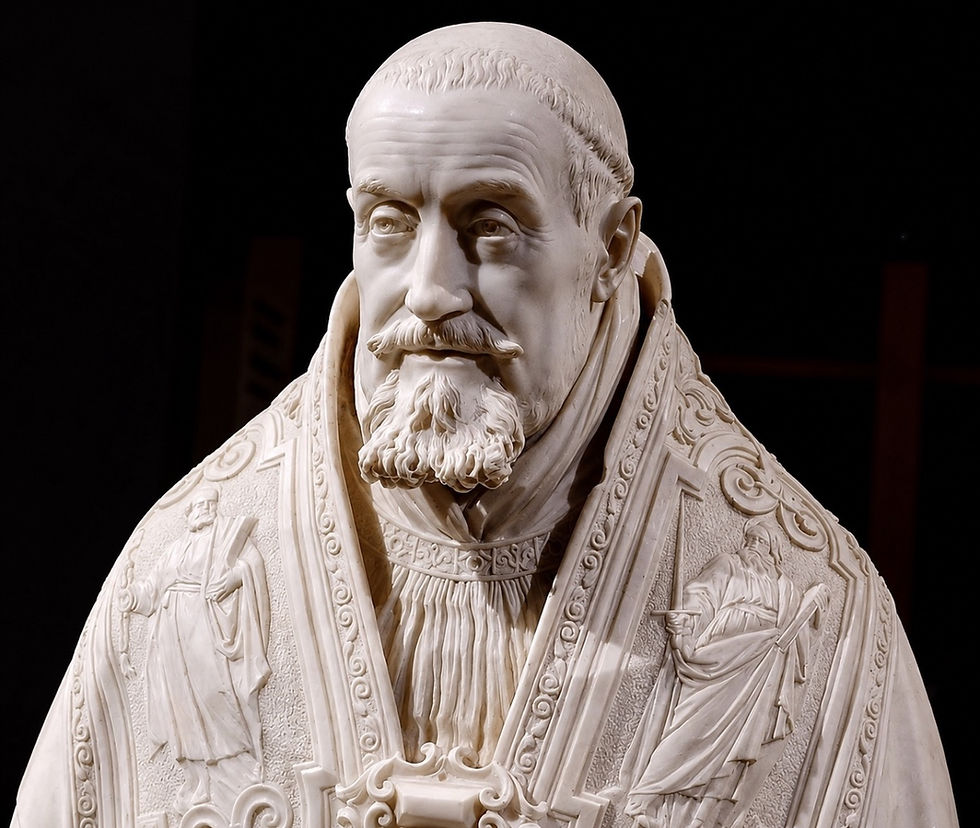
The term propaganda first appeared in the 17th century within the Catholic Church. In 1622, Pope Gregory XV established a special institution called Congregatio de Propaganda Fide, or the Congregation for the Propagation of the Faith.
The task of this institution was to spread the Catholic faith throughout the world and organize missionary activities, especially after the Protestant Reformation had seriously shaken the unity of Christianity in Europe. During that period, the word propaganda had no negative connotations and simply meant the spreading of ideas, beliefs, or religious messages.
Only later did the term begin to acquire a political meaning. Eventually, in the modern sense, propaganda came to represent the systematic dissemination of information and messages designed to influence the opinions, emotions, and behavior of a particular group of people.
Although the word propaganda itself appeared only in the 17th century, propaganda as a practice has existed for thousands of years. Ancient civilizations already understood the importance of shaping public opinion.
In ancient Rome, propaganda was an integral part of the political system. Emperors used coins, monuments, and public inscriptions to spread messages about their power and achievements. Coins often depicted military victories, while monumental architecture and triumphal arches served as lasting reminders of the state's strength and the ruler's legitimacy.
Art and architecture were frequently used to create the image of a stable and powerful empire. Through literature, sculpture, and public ceremonies, the idea of a renewed and strong Rome was constantly reinforced. This represents one of the earliest large-scale examples of state propaganda.

During the Middle Ages, propaganda was strongly connected to religion and political authority. The Church used art, sermons, and religious texts to shape the way believers thought. Frescoes in churches, stained glass windows, and religious symbols did not serve only as decoration but also as tools for transmitting ideological messages.
Kings and feudal rulers also used various forms of propaganda to justify their authority. Chronicles and historical records were often written to glorify rulers and portray them as legitimate heirs to divine power.
The invention of the printing press in the 15th century dramatically changed the speed at which ideas could spread. For the first time in history, texts could be reproduced quickly and distributed to a much larger audience.
However, the true era of mass propaganda emerged during the First World War. Governments systematically used media to influence not only their own populations but also international audiences. Posters, newspapers, films, and radio broadcasts were used to motivate citizens to support the war effort while simultaneously demonizing the enemy.
Joseph Goebbels and Propaganda in Nazi Germany
One of the most radical and well-known examples of propaganda occurred in Nazi Germany. After the Nazis came to power in 1933, propaganda became a central instrument of political control.
Germany even had a dedicated Minister of Propaganda in the figure of infamous Joseph Goebbels, one of Adolf Hitler’s closest associates. Goebbels elevated propaganda to a new level, almost turning it into a form of political art.
His ministry extended its influence into virtually every aspect of public life. Newspapers, radio, film, literature, theater, and visual arts were all placed under strict control.
Historians who later analyzed Nazi propaganda identified several principles that characterized Goebbels’s approach.
One of the fundamental principles was the simplification of messages. Complex political problems were reduced to simple slogans that anyone could understand.
Another key principle was the creation of an enemy. The regime systematically constructed an image of a supposed enemy responsible for society’s problems, in this case, the Jewish population.
Constant repetition also played a crucial role. Ideas were repeated relentlessly across all available media until they became part of everyday perception.
Goebbels also emphasized the power of emotion. Propaganda was not meant to convince through rational argument but to provoke feelings such as fear, pride, or hatred.
Control of information was another essential element. News that was unfavorable to the regime was frequently censored or completely hidden from the public. In this way, propaganda created a parallel reality in which information was filtered according to the political interests of those in power.
The goal of propaganda in Nazi Germany was to shape how people thought about politics, society, and race. Nazi propaganda aimed to create a powerful cult of leadership, stimulate nationalism, and spread antisemitism.

Propaganda in the Digital Age
Today, in the 21st century, an era defined by digitalization and social media, propaganda has not disappeared. Instead, it has evolved into something entirely new and far more sophisticated.
For the first time in the history of human civilization, information has become instantly accessible to almost everyone through the internet. Within seconds, and often with just a few clicks, information can travel across the globe.
News and narratives now spread at incredible speed through social networks and messaging platforms. The state is no longer the only actor capable of producing propaganda.
Today, political parties, corporations, interest groups, influencers, and even ordinary individuals can spread their own narratives to global audiences.
However, this transformation has also brought serious challenges. Alongside the enormous potential for communication and information sharing, modern society has seen the rise of disinformation, false narratives, deepfake technology, manipulation, and other distortions of reality.
Computer algorithms now determine what becomes visible and what disappears from public attention. They decide what is trending and what remains hidden.
One only needs to look at the examples of Elon Musk or Donald Trump. A single post on social media or a public statement from influential figures can trigger massive movements in cryptocurrency markets or stock prices, provoke public unrest, spark large-scale protests, or intensify geopolitical tensions.
The digital age has therefore created a new phase of propaganda, one in which information can become viral in an extremely short period of time and influence millions of people around the world. At the same time, enormous power and responsibility have been placed in the hands of individuals who can shape global narratives with a single message.
Conclusion
Propaganda is not an invention of the modern internet. It has existed throughout the entire history of human societies, from ancient empires and medieval religious institutions to modern nation-states and digital platforms.
Although media technologies have changed dramatically, the fundamental principles of propaganda remain almost the same. Simplification of messages, emotional influence, constant repetition, and control of information continue to be powerful tools in shaping public opinion.
What has changed is the speed, scale, and reach of propaganda.
In the digital age, propaganda spreads faster, travels further, and is often far more difficult to recognize than ever before. For that reason, understanding its history and mechanisms is becoming increasingly important for anyone who wants to critically evaluate the information we encounter every day.


This is a test message!😀
Feel free to comment!