
Listen to Your Gut, Really
Updated: Jul 17
Science explains the story of where the mind ends and the body begins

Over the past several decades, research across neuroscience, endocrinology, gastroenterology, and clinical psychology has converged on a picture in which the body is not the passive vehicle of the mind but an active participant in mood, cognition, and emotional regulation.
Scientists are increasingly exploring the ways the body and mind interact through biological systems that connect the brain with the gut, hormones, the nervous system, and our awareness of internal bodily sensations.
The emerging picture suggests that our wellbeing may be influenced not only by what we think, but also by what we feel in our bodies.
The gut connection to the brain
Perhaps no finding has done more to destabilize the mind-body divide than the science of the gut-brain axis.
In a landmark 2015 review published in Annals of Gastroenterology, Carabotti and colleagues described a system of bidirectional communication between the central nervous system and the enteric nervous system, the vast network of neurons lining the gastrointestinal tract, that links the brain's emotional and cognitive centers with the peripheral functions of the intestine.
The gut-brain axis operates through multiple channels simultaneously: neural pathways, endocrine signaling, immune responses, and what researchers call humoral links.
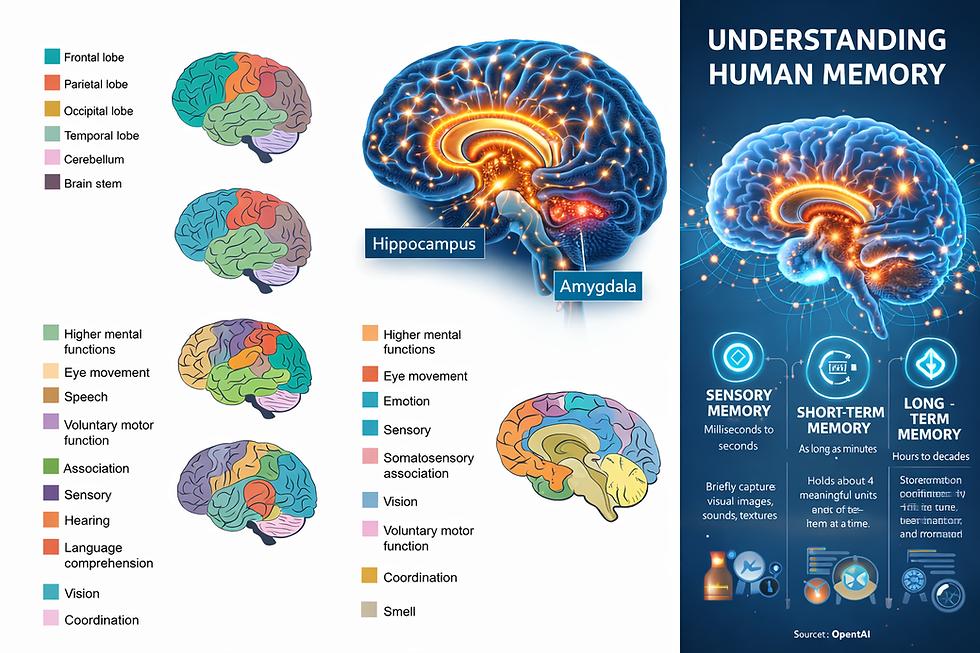
The hypothalamic-pituitary-adrenal (HPA) axis, the brain's central stress-response system, involving the amygdala, hippocampus, and hypothalamus, can be activated by emotional states and communicates along autonomic pathways with the intestinal wall, modulating motility, immunity, and the permeability of the gut lining.
But the more striking finding is the role of the gut's own microbial inhabitants.
Strong evidence now supports that gut microbiota communicates bidirectionally with the central nervous system, regulating brain chemistry and influencing neuroendocrine systems associated with stress response, anxiety, and memory function.
In clinical practice, disruptions to this system, a state called dysbiosis. have been associated with central nervous system disorders including anxiety, depression, and autism-spectrum conditions, as well as functional gastrointestinal disorders like irritable bowel syndrome (IBS).
What this means, practically, is that the emotional brain is not simply the origin point of distress that then affects the gut. The gut shapes the brain too.
These interactions, as the Carabotti review puts it, have "multiple effects on affect, motivation, and higher cognitive functions".
Cortisol: The Hormone That Rewires
If the gut-brain axis represents one mechanism through which the body influences the mind, the stress hormone cortisol represents another.
Cortisol is a glucocorticoid hormone that regulates the body's response to physical and psychological stress. Cortisol is being produced in and by the adrenal glands.

It follows a diurnal cycle, rising in the morning and declining through the day, and surges in response to perceived threat.
In the short term, this surge is adaptive: it mobilizes energy, sharpens attention, and prepares the body to respond.
But when cortisol remains chronically elevated, as it does under conditions of persistent stress, anxiety, or trauma, the consequences are far-reaching and, in many cases, structural.
A 2025 review published in Pharmacological Reports found that elevated or dysregulated cortisol is linked to mood disorders including anxiety and depression, with both high and low cortisol capable of impairing cognitive function and emotional stability.
The hippocampus and amygdala, brain regions central to memory and fear processing, are particularly vulnerable to chronic cortisol exposure, which can cause measurable atrophy in these areas, affecting memory, fear responses, and executive function.
In children, the effects are especially consequential.
Chronic stress and elevated cortisol in early life can lead to structural changes in the hippocampus and prefrontal cortex, with lasting effects on memory and decision-making that persist into adulthood.
Childhood adversity is associated with altered cortisol reactivity. And that altered reactivity, over time, is linked to increased vulnerability to obesity, addiction, and psychiatric illness.
The body, it turns out, keeps an account of what has happened to it.
The picture is further complicated by the counterintuitive finding that chronically stressed children and adults may over time exhibit lower cortisol levels rather than higher ones. It is a "blunted" stress response that reflects a system that has been overwhelmed and has been downregulated.
This pattern has been documented in children with prolonged behavioral problems and is implicated in conditions including ADHD, where meta-analyses have found lower morning and cumulative daily cortisol levels in affected children compared to healthy controls.
Body awareness

Underlying much of this research is a concept that has only recently entered wider scientific and clinical consciousness: interoception.
Defined as the sensation, interpretation, and prediction of signals arising from within the body, interoception is increasingly understood as a foundational mechanism of emotional life.
A comprehensive review published in 2025 in PMC found that interoception is reliably disrupted across a wide range of mental health conditions, and proposed it as a likely "active ingredient" in effective psychological and pharmacological treatments.
This is a significant claim: it suggests that what makes therapies work may not simply be the restructuring of thoughts or the management of behavior, but the restoration of a person's capacity to accurately perceive and interpret the signals their own body is sending.
Body awareness, as researchers at the Osher Center for Integrative Medicine have described it, involves an attentional focus on internal bodily sensations, the "subjective, phenomenological aspect of proprioception and interoception that enters conscious awareness."
This awareness is not fixed; it is modifiable by mental processes including attention, interpretation, appraisal, beliefs, memories, conditioning, and affect.
Which means, practically, that the way a person relates to their body's signals is itself something that can be cultivated or impaired.
This framing has particular implications for trauma. Body-based approaches in psychotherapy have long recognized what neuroscience is now confirming: that sensations are processed through the lower brain centers of the brainstem and limbic system, areas that are, critically, devoid of language, before being integrated at the conscious, verbal level.
All emotions, in this view, are first embodied; we experience sensations before we can name what we feel. Trauma, which often involves sensory overwhelm that exceeds the capacity for verbal processing, may be especially legible at the level of the body.

Conclusion
The mind does not end at the brain. It extends into the gut, through the hormonal system, down to the level of how we register and interpret the physical sensations of being alive.
Disruptions anywhere in this system, a dysbiotic gut ripple outward into mood, cognition, and behavior.
And by the same logic, interventions that work through the body, rebuilding interoceptive awareness, restoring autonomic regulation, teaching people to read their own physiological state, are not peripheral to mental health care. They may be foundational to it.

Comments