
The Cost of Reactive Leadership

How Impulsive Decisions Escalate Global Crises

Leadership in times of crisis demands composure, foresight, and restraint. Yet when decision-making is driven by emotion, ego, or short-term political gain, even the most powerful nations can stumble into spirals of escalation that destabilize the global order. Research shows that leaders with high emotional intelligence are better equipped to manage stress, preserve morale, and avoid impulsive reactions during crises.[1][2] In contrast, reactive leadership -characterized by sudden shifts in behaviour and a reliance on gut instinct over analysis- tends to amplify uncertainty and mistrust among international actors.
The phenomenon is not new, but its consequences have grown more severe in an era of instant communication and 24-hour news cycles. Leaders who prioritize immediate gratification -whether through symbolic gestures, public posturing, or social media outbursts- often undercut the very institutions meant to prevent conflict. This pattern was starkly evident during the Trump administration, where foreign policy was frequently shaped by impulsive tweets and off-the-cuff remarks rather than structured diplomatic processes. [3][4]
Donald Trump and the Rise of “Twitter Diplomacy”
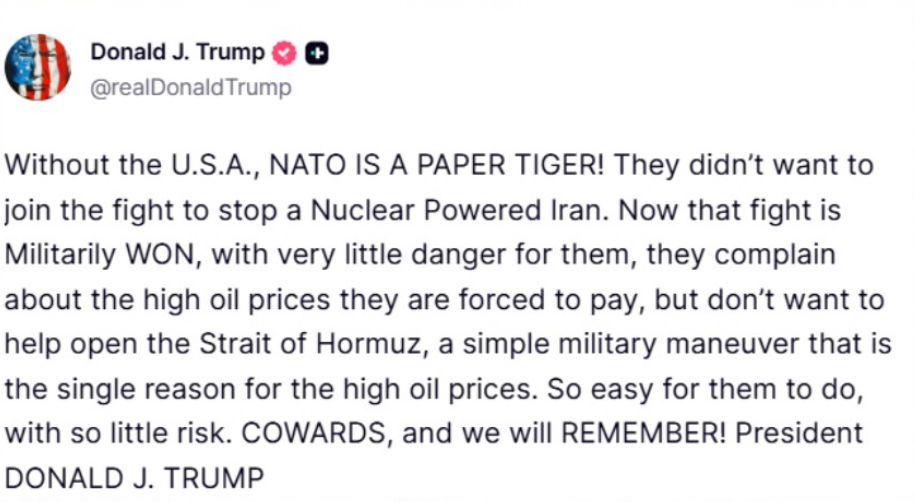
No modern leader has exemplified the risks of reactive governance more vividly than the U.S. President Donald Trump. His presidency was marked by a foreign policy approach that prioritized spectacle over strategy, with decisions often announced in real time via Twitter, earning the label “Twitter diplomacy”. This method bypassed traditional diplomatic channels, leaving allies and adversaries alike scrambling to interpret and respond to sudden policy shifts.
One of the most consequential examples came in 2018, when Trump abruptly announced the withdrawal of U.S. troops from Syria, a move that stunned allies like the Kurds and emboldened regional adversaries such as Turkey and Iran. The decision was framed as a fulfilment of campaign promises but was made without consultation with military or diplomatic advisors, leading to a power vacuum that fuelled further conflict. Similarly, Trump’s offer to allow Russian security services to question a former U.S. ambassador, a move that was widely condemned as a betrayal of diplomatic norms and undermined trust in U.S. leadership.

Trump’s foreign policy was also marked by abrupt reversals, such as his sudden shift from isolationism to aggressive rhetoric against North Korea, only to later engage in high-profile summits with Kim Jong-un. These inconsistencies were not merely rhetorical flourishes; they eroded confidence in the U.S. as a reliable partner and emboldened adversaries to test boundaries.
The Domino Effect: How Reactive Decisions Fuel Global Instability
The consequences of reactive leadership extend far beyond individual policy blunders. When a major power acts impulsively, it can trigger a chain reaction that draws in other states, escalates tensions, and hardens positions on all sides. The U.S.-Israel-Iran escalation of 2026, for instance, was fuelled in part by years of reactive posturing -including threats, sanctions, and military posturing- that left little room for de-escalation. Such dynamics are not unique to the Middle East; they reflect a broader pattern in which reactive leadership transforms localized disputes into systemic risks.
It is safe to say, then, that crisis diplomacy often fails when leaders prioritize short-term political gains over long-term stability.[5] In Ukraine, for instance, the failure of reactive conflict prevention measures -such as delayed sanctions or inconsistent support for negotiations- allowed a localized conflict to metastasize into a full-blown war.[6]
The psychological toll of reactive leadership is also significant. Leaders operating under stress are more likely to misread signals, overestimate their own control, and underestimate the resolve of adversaries.[7] This “illusion of control” can lead to overreach, as seen in Trump’s threats of military action against Venezuela and North Korea, both of which raised the spectre of direct confrontation without clear exit strategies.
The Erosion of Trust: How Impulsivity Undermines Diplomatic Institutions
Institutions like the United Nations, NATO, and regional alliances are built on trust and predictability. Reactive leadership, however, systematically erodes these foundations. When a leader’s commitments are conditional on whim or public approval, allies become hesitant to invest in long-term partnerships, and adversaries see opportunities to exploit divisions.

The Trump administration’s approach to NATO provides a stark example. After repeatedly criticizing the alliance and questioning its relevance, Trump’s erratic stance sowed doubt among European members about U.S. reliability, undermining collective defense efforts and emboldening Russia to test NATO’s resolve.[8] Similarly, Trump’s threats to withdraw from NATO or impose tariffs on allies created uncertainty that weakened the alliance’s deterrent power.
This erosion of trust is not limited to military alliances. Trade agreements, climate accords, and arms control treaties all depend on the assumption that signatories will honour their commitments. When a leader signals unpredictability -whether through tariffs, withdrawals, or public insults- it becomes harder to negotiate in good faith, and easier for adversaries to justify non-compliance.
The Human and Economic Cost of Escalation
The most tragic consequence of reactive leadership is the human toll. Conflicts fuelled by impulsive decisions lead to civilian casualties, mass displacement, and long-term trauma. The Syrian civil war, which escalated in part due to abrupt policy shifts and inconsistent international responses, has resulted in over half a million deaths and displaced millions more.
Economically, reactive leadership imposes costs that ripple across the globe. Oil markets, supply chains, and financial systems are all sensitive to geopolitical shocks. When leaders make impulsive decisions -such as Trump’s sudden tariffs on China or threats to attack Iranian oil facilities- the economic fallout can be severe, affecting everything from gas prices to global trade flows. Experts warn that further escalation in ongoing conflicts could destabilize oil markets and trigger broader economic crises, particularly in vulnerable regions.
Lessons from History: Why Proactive Leadership Matters
History offers clear lessons on the dangers of reactive governance. The Cuban Missile Crisis of 1962, for instance, was resolved not through impulsive threats or posturing, but through disciplined crisis management, backchannel diplomacy, and a willingness to compromise. Similarly, the post-World War II order was built on institutions designed to prevent the kind of reactive escalation that had led to two world wars.
Today, as geopolitical tensions rise -from the Russia-Ukraine war to tensions in the South China Sea- the need for proactive leadership has never been greater. Leaders must resist the temptation to prioritize short-term optics over long-term stability, and instead invest in diplomacy, trust-building, and institutional resilience.[9]
A Call for Sustainable Leadership in International Politics
The alternative to reactive leadership is not passivity, but strategic foresight. Sustainable leadership in international politics requires: institutional respect, emotional discipline, long-term thinking, and diplomatic consistency. Honoring commitments to alliances, treaties, and international bodies ensures that allies and adversaries alike can predict and trust a nation’s actions, leading to a prioratization of stability over short-term political gains.
The cost of reactive leadership is not abstract; it is measured in lives lost, economies disrupted, and trust eroded. As the world faces increasingly complex challenges -from climate change to nuclear proliferation- the risks of impulsive governance will only grow. The question is not whether leaders will face crises, but whether they will rise to meet them with strategy, humility, and restraint.


Comments