
Space: the Next Frontier of Geopolitical Competition

The Cosmic Chessboard: Why Space Matters Now More Than Ever

Space is no longer the exclusive domain of scientists, astronauts, or dreamers. It has become a critical arena for geopolitical competition, where nations vie for dominance in technology, resources, and influence. The stakes are higher than ever: control over satellites ensures military superiority, lunar expansion promises untapped resources, and space-based infrastructure underpins modern economies. As nations like the United States, China, Russia, and emerging players such as India push the boundaries of space exploration, and private corporations like SpaceX and Blue Origin redefine what’s possible, the rules of engagement are being rewritten. This is not just about reaching the stars; it’s about securing power on Earth and beyond.
The 21st century has seen space evolve from a symbol of Cold War rivalry into a multi-dimensional battleground. No longer a distant frontier, it is now a place where economic ambition, military strategy, and national prestige intersect. The question is no longer if space will shape geopolitics, but how, and who will dictate the terms.
Satellite Security: The Invisible Infrastructure of Modern Warfare
Satellites are the silent sentinels of the modern world. They enable everything from GPS navigation to financial transactions, global communications, and military operations. Yet, this reliance on space-based assets has created a new frontier for conflict: satellite security. These orbiting systems, once considered untouchable, are now vulnerable to a growing array of threats, transforming space into a domain of both opportunity and peril.

The threat landscape is expanding rapidly. Nations and non-state actors are developing anti-satellite (ASAT) weapons designed to disable or destroy critical infrastructure in orbit. Russia, for instance, has tested ASAT missiles capable of intercepting satellites in low Earth orbit, demonstrating a chilling capability to disrupt global communications and intelligence networks. China, too, has conducted similar tests, raising concerns about its long-term intentions. Meanwhile, the United States has responded by establishing the Space Force in 2019, a dedicated branch of the military tasked with protecting American interests in space. This move underscores a sobering reality: space is no longer a sanctuary but a contested domain where nations must actively defend their assets.
The race for space dominance is not limited to kinetic strikes. Cyber warfare has emerged as a particularly insidious threat, with adversaries capable of hijacking satellites, spoofing GPS signals, or even rendering entire networks inoperable through digital sabotage. The 2021 SolarWinds hack, which compromised U.S. government systems, served as a stark reminder that vulnerabilities in space infrastructure can have cascading effects on Earth. As nations invest in resilient satellite architectures and space situational awareness, the question remains: Can we secure the final frontier before it becomes the ultimate battleground?
Private companies are now playing an outsized role in this arena. SpaceX’s Starlink constellation, for example, has revolutionized global internet access but has also raised concerns about corporate control over critical infrastructure. Governments are struggling to regulate these private actors while ensuring that space remains a stable and secure environment. The challenge is clear: as space becomes more accessible, it also becomes more contested.
Lunar Expansion: The New Gold Rush
The Moon is no longer a distant dream but a tangible target for exploration, exploitation, and even colonization. With NASA’s Artemis program leading the charge, alongside China’s Chang’e missions and partnerships with international agencies like ESA and JAXA, the race to the Moon is on. But beyond scientific curiosity, the Moon holds strategic and economic value that could reshape geopolitics for decades to come.
At the heart of this new lunar era is the promise of resource extraction. The Moon is rich in rare earth elements, such as helium-3 -a potential fuel for future nuclear fusion reactors-and water ice, which can be converted into hydrogen and oxygen for rocket fuel.[1] Controlling these resources could give nations a decisive technological and economic edge. China has already landed a rover on the far side of the Moon and is planning a lunar research station in collaboration with Russia, signalling its intent to establish a permanent presence. Meanwhile, the U.S. is pushing forward with the Artemis Accords, a framework aimed at creating a sustainable human presence on the Moon by 2030, with a focus on mining and scientific research.

The geopolitics of lunar expansion, however, extend far beyond science and economics. The establishment of lunar bases will require unprecedented levels of international cooperation, but it will also spark intense competition. The Artemis Accords, signed by over 40 countries, aim to create a framework for peaceful exploration, but not all nations are on board. Additionally, the U.S. and others argue that resource extraction should be governed by national laws rather than international treaties, setting the stage for a potential clash over lunar sovereignty.
Private companies are also positioning themselves as key players in this new frontier. SpaceX and Blue Origin, among others, are developing lunar landers and infrastructure to support future missions. This raises critical questions about the role of corporations in shaping the future of space. Will they act as partners in a collective effort, or will they prioritize profit over the collective good? The answers will define the next era of lunar exploration.
Yet, the military implications of lunar expansion cannot be ignored. While the Moon is not yet a battlefield, its strategic location makes it a potential military outpost. Nations are exploring the possibility of deploying lunar surveillance systems to monitor Earth and space, or even establishing supply depots for deep-space missions. The militarization of the Moon could turn it into a new Cold War-style battleground, where nations compete for dominance beyond Earth.
The Weaponization of Space
Space is already a domain of warfare, and its militarization is accelerating at an unprecedented pace. The development of space-based weapons, hypersonic missiles, and cyber capabilities is reshaping global security dynamics, turning the final frontier into a potential flashpoint for conflict.
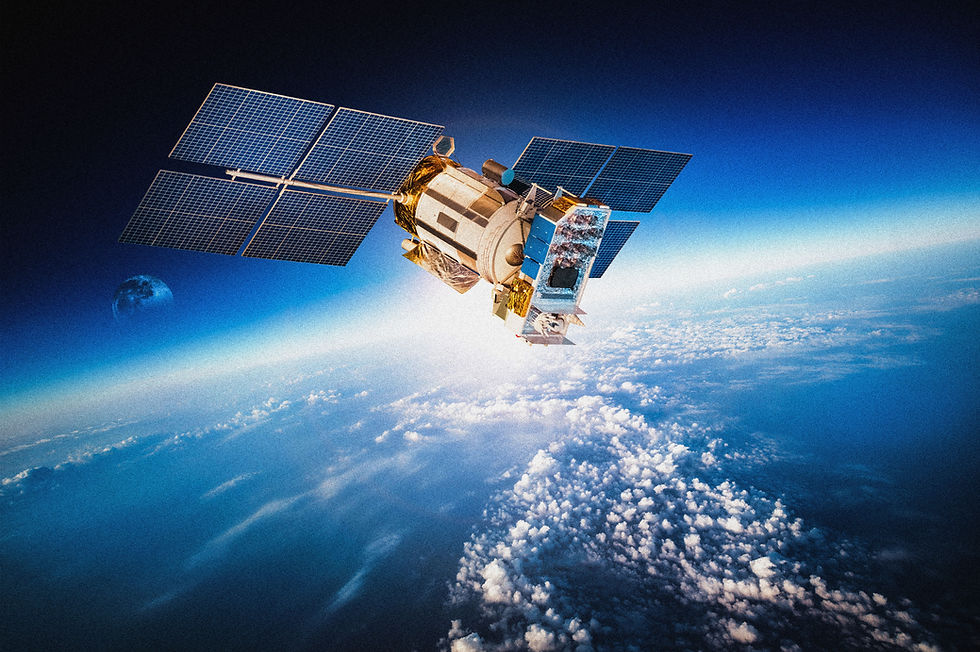
One of the most concerning trends is the rise of space-based weapons. While the Outer Space Treaty of 1967 prohibits the placement of nuclear weapons in orbit, it does not explicitly ban other types of armaments. Nations are now exploring kinetic weapons, such as satellites designed to collide with or intercept other satellites, as well as directed-energy weapons, such as space-based lasers capable of disabling or destroying targets on Earth or in space. The U.S. X-37B space plane, a reusable unmanned spacecraft, has been linked to classified military experiments, including potential tests of space-based weaponry. China and Russia, meanwhile, are developing co-orbital ASAT systems that can maneuver close to enemy satellites before striking, blurring the line between peaceful exploration and military aggression.
Hypersonic missiles, which travel at speeds greater than Mach 5, rely on space-based systems for guidance and targeting. The ability to track and intercept these missiles depends on satellite networks, making space a critical component of modern defense systems. Nations that control these networks hold a significant strategic advantage, but they also bear the responsibility of ensuring that space does not become a domain of unchecked militarization.
Cyber warfare has emerged as another critical threat in space. Satellites are vulnerable to hacking, signal spoofing, and data interception, all of which can disrupt communications, navigation, and intelligence. The 2021 SolarWinds hack, which affected U.S. government agencies, demonstrated how cyber vulnerabilities in space infrastructure can have far-reaching consequences. As nations invest in cyber-resilient satellite systems, the race to secure space is becoming as much about digital defense as it is about physical protection. The risk of escalation in space is a growing concern. A miscalculation or misinterpretation of satellite activity could lead to a rapid escalation, with devastating consequences. The lack of a binding international treaty governing space warfare exacerbates this risk, leaving the door open for a new arms race. Without clear rules and mechanisms for de-escalation, the militarization of space could spiral out of control, turning the final frontier into the ultimate battleground.
A New Era of Geopolitical Competition
Space is no longer a distant frontier but a critical domain of geopolitical competition. Satellite security, lunar expansion, and military implications are shaping the future of space exploration and exploitation. As nations and private companies vie for dominance, the rules of engagement are still being written. The challenge for the international community is to ensure that space remains a stable, secure, and peaceful environment, or risk turning it into the ultimate battleground.
The next decade will be decisive. Will space be a realm of cooperation and shared prosperity, or a new frontier for conflict and competition? The answer lies in the actions nations take today. The time to act is now, before the cosmos becomes yet another theater for geopolitical rivalry.


Comments