
Love, Relationships & Connection

The Human Need for Connection
Love is perhaps the most familiar experience we share as human beings, yet it remains one of the least predictable. It has inspired civilizations to write poetry, compose music, develop philosophies and dedicate decades of scientific research to understanding why people form deep emotional bonds. Despite this ongoing exploration, no universal formula has ever been able to explain why some relationships grow stronger over time while others slowly drift apart.

Every romantic relationship, friendship and family bond is shaped by two unique individuals bringing their own personalities, values, experiences and expectations into a shared journey.
Relationships are not simply one aspect of life, they are woven into nearly every part of it. They influence our emotional wellbeing, physical health, confidence, productivity and overall sense of purpose. They determine how supported we feel during periods of uncertainty and how deeply we celebrate moments of happiness. Whether we are speaking with a partner over breakfast, sharing memories with lifelong friends, comforting a family member or welcoming guests in a professional environment, the quality of our relationships quietly shapes the quality of our lives.
Modern society has transformed the way people connect. Digital technology enables conversations across continents within seconds, yet many individuals report feeling more isolated than ever before. Notifications interrupt conversations, social media often replaces authentic dialogue with carefully curated moments, and demanding careers leave little room for genuine presence. We have become remarkably efficient at communicating, but less intentional about truly understanding one another.
For professionals working in hospitality, tourism, healthcare and other service-oriented industries, this challenge is particularly familiar. Every interaction contributes to the experience of another person. Guests rarely remember only the comfort of a room or the quality of a meal; they remember how they were treated, whether they felt respected and whether someone genuinely cared about their wellbeing. The same principle applies beyond the workplace. At the end of the day, we return home to partners, children, parents and friends who deserve the same presence and empathy that we often provide to strangers throughout our working lives.
This growing awareness has contributed to the increasing interest in mindfulness. Once associated primarily with meditation practices, mindfulness is now widely studied within psychology, neuroscience and behavioural science. Rather than encouraging people to escape from life, mindfulness teaches them to become more fully engaged with it. It invites individuals to observe their thoughts, emotions and experiences with clarity before automatically reacting to them. Within relationships, this ability has the potential to transform communication, strengthen trust and deepen emotional connection.
The Relevance of Mindfulness in Organising Positive and Negative Thoughts, Emotions and Experiences
Every relationship exists on two different levels. The first is visible: conversations, shared experiences, gestures of kindness and daily interactions. The second is invisible, unfolding entirely within the mind. Memories, insecurities, expectations, previous disappointments and personal beliefs constantly influence how people interpret the behaviour of those around them. While two individuals may experience exactly the same event, the meaning they assign to it can be completely different.
Consider something as simple as receiving a brief message from someone you care about. A short reply such as "Okay"or "Fine" may appear entirely neutral, yet it can trigger countless interpretations. One person reads it as agreement, while another immediately wonders whether something is wrong. The words remain identical, but the emotional response differs because each individual interprets the situation through their own experiences and assumptions.
Mindfulness teaches people to become aware of this internal process. Rather than immediately believing every thought that appears, individuals learn to recognise thoughts as mental events rather than objective facts. This distinction is subtle but transformative. It creates a pause between perception and reaction, allowing people to respond thoughtfully instead of impulsively.
Many relationship conflicts begin not because of harmful intentions, but because assumptions quietly replace communication. A delayed response is interpreted as rejection. A tired expression becomes evidence of disappointment. Silence is mistaken for anger. Without awareness, these assumptions quickly become emotional reactions that influence conversations before either person fully understands what has happened.
Mindfulness interrupts this cycle by encouraging curiosity instead of certainty. It invites us to ask whether our interpretation reflects reality or simply our emotional perspective. This willingness to question our own assumptions reduces unnecessary conflict and creates space for openness, understanding and dialogue.
Mindfulness also changes the way people experience positive moments.
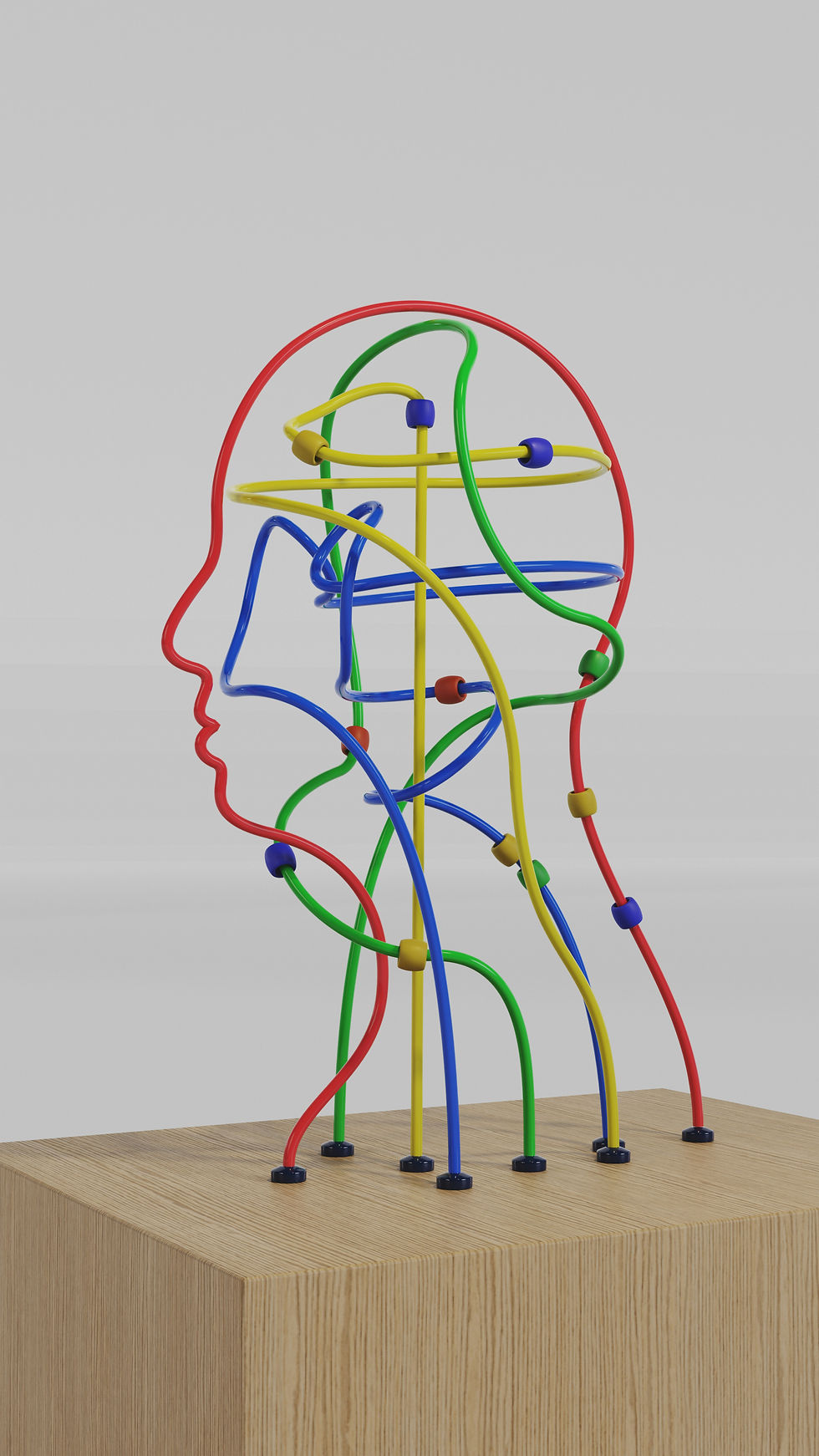
In modern life, meaningful experiences often pass unnoticed because attention is already focused on future responsibilities or unfinished tasks. A family dinner becomes another appointment in a busy schedule. A conversation with a close friend competes with incoming notifications. A peaceful evening with a partner is interrupted by thoughts about tomorrow's work.
Although these moments appear ordinary, they quietly form the emotional memories that sustain relationships for years to come.
By bringing attention back to the present moment, mindfulness allows people to experience these interactions more deeply. Shared laughter, meaningful conversations, expressions of gratitude and simple moments of silence become experiences that are genuinely felt rather than absent-mindedly passed through. Research within positive psychology increasingly demonstrates that consciously appreciating positive experiences strengthens emotional wellbeing, increases relationship satisfaction and reinforces feelings of gratitude toward the people who enrich our lives.
Equally important is the way mindfulness helps people navigate difficult emotions. Love does not eliminate disappointment, friendship does not prevent misunderstanding and family relationships are not immune to conflict. Every meaningful connection will eventually encounter frustration, sadness, uncertainty or disagreement. These emotions are not signs of failure but natural expressions of human relationships.
The challenge lies in how people respond to these emotions.
Without awareness, emotional discomfort often leads directly to reactive behaviour. Hurt becomes criticism. Fear becomes control. Insecurity develops into jealousy. Disappointment turns into emotional withdrawal. Although these reactions may feel justified in the moment, they frequently deepen misunderstandings instead of resolving them.
Mindfulness encourages another response. By recognising emotions as they arise, individuals create enough psychological space to express themselves with honesty rather than impulsiveness. Instead of saying, "You never listen to me," someone may recognise the deeper experience beneath the frustration and communicate, "I don't feel heard right now." The emotion remains authentic, but the conversation immediately becomes more constructive.
Personal Responsibility, Empathy and Progressive Energy
One of the most significant contributions mindfulness makes to relationships is the development of personal responsibility. Healthy relationships cannot thrive if every challenge is viewed solely through the lens of another person's mistakes. While we cannot control the behaviour, opinions or emotions of others, we remain responsible for our own communication, reactions and choices.
Personal responsibility should never be confused with self-blame. Instead, it reflects the recognition that every interaction offers an opportunity to contribute positively to the relationship. This shift changes the central question from "Who is responsible for this problem?" to "What can I do to improve this situation?" Such a perspective transforms relationships from competitions into partnerships where both individuals work toward the same goal: strengthening the connection itself.
Empathy naturally grows from this mindset. Contrary to popular belief, empathy does not require agreement. It simply requires the willingness to understand another person's emotional experience. Parents may disagree with their children while still recognising their disappointment. Friends may hold different opinions while respecting one another's perspective. Romantic partners may interpret events differently while remaining committed to understanding before judging.
Mindfulness strengthens empathy by encouraging individuals to become fully present during conversations. Rather than preparing responses while someone else is speaking, mindful listening allows genuine understanding to emerge. Feeling heard remains one of the most fundamental human needs, and relationships often deepen significantly when individuals experience that their thoughts and emotions are received without immediate criticism or correction.
Every individual also participates in several circles of connection. The first typically consists of romantic partners and immediate family members. A second circle includes close friends and trusted relatives. Beyond these lies a broader network of colleagues, neighbours, acquaintances and communities that together form the social fabric of everyday life.
This reality is especially visible within hospitality and service industries. A receptionist's genuine warmth can shape a guest's entire experience. A manager's calm leadership can influence the emotional atmosphere of an entire team. A compassionate healthcare professional can bring reassurance during moments of uncertainty. Small acts of presence frequently create effects that extend far beyond the original interaction.
Mindfulness therefore becomes more than a personal wellbeing practice. It represents a conscious decision about the emotional influence we wish to have on the people around us. Every conversation provides an opportunity to contribute understanding instead of judgement, patience instead of frustration and encouragement instead of criticism. Although these choices may appear small in isolation, together they strengthen families, friendships, workplaces and communities.
Looking Ahead
Perhaps this is the greatest lesson relationships can teach us. Love is not sustained by emotion alone, friendship is not maintained solely by shared interests and family bonds are not strengthened simply by history. Enduring relationships are built through countless moments of awareness in which people consciously choose presence over distraction, empathy over assumption and responsibility over blame.
Mindfulness reminds us that meaningful connection is not something we occasionally experience, it is something we continuously create through the quality of our attention. Every conversation, every shared experience and every thoughtful response becomes another opportunity to strengthen the relationships that ultimately give life its greatest meaning. How Mindfulness Can Strengthen Communication, Trust and Lasting Relationships
Every meaningful relationship is built upon communication, yet communication is often misunderstood as the simple exchange of words. In reality, people communicate long before they begin speaking. A glance across the room, a change in posture, the rhythm of someone's breathing, the tone of a voice or even a prolonged silence can communicate emotions more powerfully than language itself. Human beings constantly interpret these subtle signals, often without consciously realizing it. Because so much of communication takes place beneath awareness, misunderstandings are not the exception, they are an inevitable part of being human.
Mindfulness does not promise perfect conversations, but it fundamentally changes the quality of them. Instead of reacting automatically, individuals become more aware of what is happening both within themselves and within the other person. They notice emotional tension before it escalates, recognise defensive patterns as they emerge and develop the capacity to pause before speaking. That pause, although it may last only a few seconds, often determines whether a conversation becomes constructive or destructive.
Listening is perhaps the most overlooked communication skill of all. In many conversations people are not truly listening; they are preparing their next argument, searching for evidence that supports their own perspective or waiting for an opportunity to interrupt. Genuine listening requires curiosity rather than certainty. It requires the willingness to temporarily set aside personal assumptions in order to understand another person's reality. Mindfulness strengthens this capacity by encouraging complete attention to the present moment. Instead of hearing only the words, people begin noticing the emotions beneath them.

This shift can dramatically alter romantic relationships. Partners often discover that recurring arguments are rarely about household responsibilities, finances or daily routines alone. Beneath these practical disagreements often lie universal emotional needs: the desire to feel appreciated, respected, understood, supported or emotionally safe. When conversations begin addressing these deeper needs instead of merely debating surface-level problems, relationships often become significantly stronger.
The same principle applies within families. Parents frequently find themselves correcting behaviour without fully exploring the emotions driving it. Children, regardless of age, often seek understanding before advice. Adult family members may carry years of unspoken expectations, unresolved disappointments or inherited communication patterns that quietly shape present-day interactions. Mindfulness encourages families to slow these patterns down long enough to recognise them, making room for conversations that are less reactive and more compassionate.
Friendships, too, benefit from this conscious approach. Long-lasting friendships are rarely defined by the absence of disagreement. Instead, they are characterised by honesty, mutual respect and the confidence that difficult conversations can strengthen rather than damage the relationship. Friends who practise mindful communication create space for vulnerability without fear of immediate judgement. They become witnesses to each other's growth rather than critics of each other's imperfections.
Trust develops naturally within this environment. Contrary to popular belief, trust is rarely established through a single extraordinary act. More often, it grows through countless ordinary moments in which people consistently demonstrate honesty, reliability and emotional presence. Keeping promises, admitting mistakes, respecting boundaries and communicating openly gradually create a sense of psychological safety. This safety allows relationships to deepen because vulnerability no longer feels dangerous.
Mindfulness strengthens trust by encouraging authenticity. Instead of attempting to appear perfect, individuals become more comfortable acknowledging uncertainty, apologising when necessary and expressing genuine emotions. Ironically, relationships often become stronger when people stop trying to protect an image of perfection and begin showing their authentic humanity.
Relationships as the Foundation of Well-Being
For decades, psychological research has consistently demonstrated that healthy relationships belong among the strongest predictors of long-term wellbeing. While career success, financial stability and personal achievements undoubtedly contribute to life satisfaction, meaningful human connection remains one of the most significant protective factors against emotional distress, loneliness and chronic stress.
This relationship between connection and wellbeing begins remarkably early in life. From infancy onwards, human beings learn about safety, trust and emotional regulation through interactions with caregivers. These early experiences shape the internal expectations people later bring into friendships, romantic partnerships and professional relationships. Although individuals continue developing throughout adulthood, the need for secure connection never disappears.
In modern society, however, independence is often celebrated more visibly than interdependence. Productivity, self-sufficiency and personal achievement frequently receive greater recognition than kindness, patience or emotional availability. Yet neuroscience increasingly suggests that human brains are fundamentally social. Positive social interaction influences hormonal regulation, reduces physiological stress responses and supports overall psychological resilience.
Hospitality professionals witness this reality every day. Guests rarely remember only the architecture of a hotel or the quality of a meal. They remember how they were welcomed, how respected they felt and whether someone genuinely cared about their experience. Emotional connection quietly shapes perception. The same principle extends into every area of life. Families remember how conflicts were resolved more than why they began. Friends remember how supported they felt during difficult periods more vividly than the details of the circumstances themselves.
Healthy relationships therefore function as emotional ecosystems. They provide stability during uncertainty, encouragement during personal growth and perspective during adversity. They remind individuals that challenges become more manageable when shared with others who genuinely care.
The Different Forms of Love
Although love is often portrayed through the lens of romance, human connection exists in many different forms, each contributing uniquely to personal development and wellbeing.
Romantic love naturally receives significant cultural attention because it combines emotional intimacy, physical attraction, companionship and shared future aspirations. Yet healthy romantic relationships gradually evolve beyond the excitement of initial attraction. As novelty naturally decreases over time, deeper qualities become increasingly important: mutual respect, emotional maturity, shared values and the willingness to continue growing together. Lasting love is sustained less by constant excitement than by continuous investment.
Family love occupies a different place within human experience. Unlike friendships or romantic partnerships, family relationships are rarely chosen. They are inherited, carrying generations of traditions, values, expectations and emotional histories. These relationships can become profound sources of support, identity and belonging, yet they may also involve complicated dynamics requiring patience, forgiveness and healthy boundaries. Mindfulness helps individuals navigate these complexities without becoming trapped by inherited patterns of resentment or misunderstanding.
Friendship represents perhaps one of the purest forms of voluntary connection. Friends choose one another without obligation, often because of shared interests, mutual admiration or emotional compatibility. Throughout life, friendships frequently become essential sources of perspective, encouragement and joy. Some friendships remain active for decades despite changing careers, families or geographical distance because they are sustained by authenticity rather than convenience.
Beyond these intimate relationships lies a wider network of human connection that is equally significant. Colleagues, neighbours, mentors, clients, healthcare professionals, teachers and community members all contribute to the broader social environment in which people live. While these relationships may not involve deep emotional intimacy, they collectively shape the culture of workplaces, neighbourhoods and societies. Respect, kindness and professionalism within these interactions create environments where trust can flourish far beyond personal circles.
Recognising these different forms of love broadens our understanding of connection itself. Love is not limited to romance. It exists wherever compassion, respect, responsibility and genuine care are consistently expressed.
Communication Forms the Core
If trust provides the foundation of relationships, communication serves as the structure built upon it. Without communication, even the strongest intentions remain invisible.
Healthy communication begins long before words are spoken. It begins with attention. People naturally communicate more effectively when they feel emotionally safe, genuinely listened to and respected regardless of disagreement. Conversely, conversations quickly deteriorate when individuals feel criticised, ignored or misunderstood.

Mindfulness strengthens communication by encouraging emotional regulation. Instead of allowing anger or frustration to dictate behaviour, individuals learn to recognise emotions while maintaining responsibility for how those emotions are expressed. This distinction is essential. Emotions themselves are neither good nor bad, they simply provide information. What determines relationship quality is how those emotions are translated into behaviour.
Constructive communication also requires vulnerability. Expressing disappointment honestly often feels more difficult than expressing anger. Saying "I feel lonely" requires considerably more courage than saying "You never spend time with me." Yet vulnerability invites empathy, whereas accusation often provokes defensiveness. Mindfulness encourages individuals to communicate from emotional honesty rather than emotional reaction.
Perhaps the greatest strength of mindful communication lies in its ability to transform conflict. Healthy relationships are not characterised by the absence of disagreement but by the ability to navigate disagreement without damaging mutual respect. Conflict becomes less about winning arguments and more about understanding perspectives. Instead of viewing one another as opponents, people begin approaching challenges as shared problems requiring collaborative solutions.
This mindset gradually changes the emotional climate of relationships. Accountability replaces blame. Curiosity replaces assumption. Compassion replaces judgement. Small moments of patience accumulate into lasting trust, while repeated acts of understanding gradually strengthen emotional resilience.
Ultimately, lasting relationships are not maintained by extraordinary gestures alone. They are built through ordinary moments repeated consistently over time: listening attentively after a long day, expressing gratitude without waiting for special occasions, acknowledging mistakes without defensiveness and choosing kindness even when disagreement exists. These seemingly modest decisions become the architecture of enduring connection.
In a rapidly changing world filled with constant distractions, perhaps mindfulness offers something increasingly rare: the ability to be fully present with another human being. In that presence, communication becomes more authentic, trust grows more naturally and relationships develop the resilience required to flourish across the many seasons of life. Love, in all its forms, ceases to be merely an emotion and becomes a conscious practice—one that enriches not only individual lives but also families, workplaces, communities and society itself.


Comments